
Sacred geometry
Golden ratio, proportion, mandalas, temples and cathedrals: form as the language of the sacred.
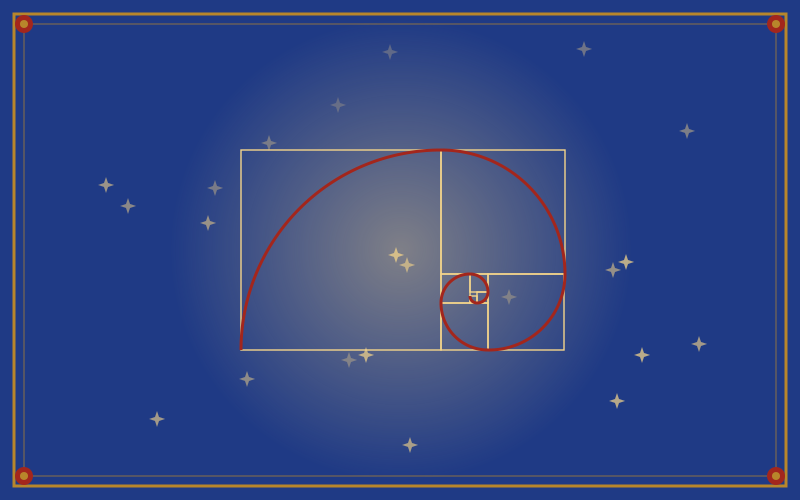
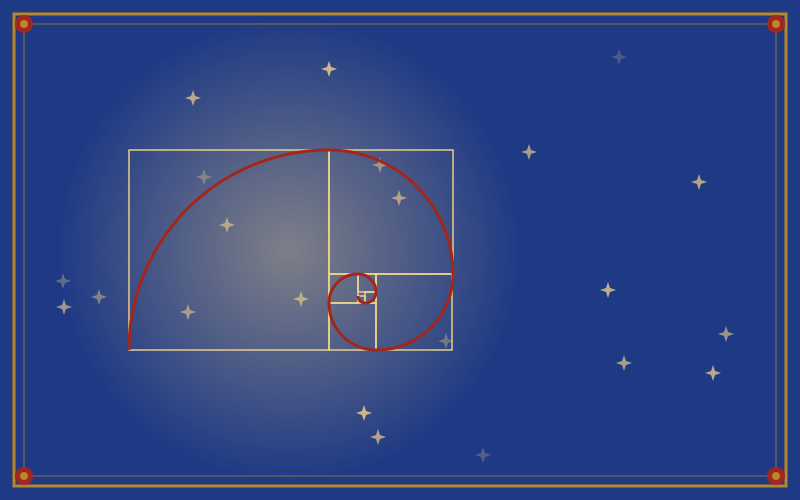
Ad quadratum and ad triangulum: the builders' secret rules
The two geometric methods medieval masters used to design churches and cathedrals, from Roriczer's booklet to the disputes over Milan Cathedral.
Castel del Monte: Frederick II's octagon in stone
Castel del Monte in Apulia: an octagonal plan, eight towers, trapezoidal rooms, the symbolism of eight and theories about an enigmatic building's purpose.
Church orientation: why the apse faces east
Why many churches have their apse facing east, how the east was found with a gnomon and a circle, and what it means to orient a sacred place.
Cosmatesque pavements: porphyry circles and a geometry of the path
Floors by the Roman marble workers called the Cosmati: reused ancient marble, porphyry roundels, quincunx and interlaced bands, from Rome to Westminster.
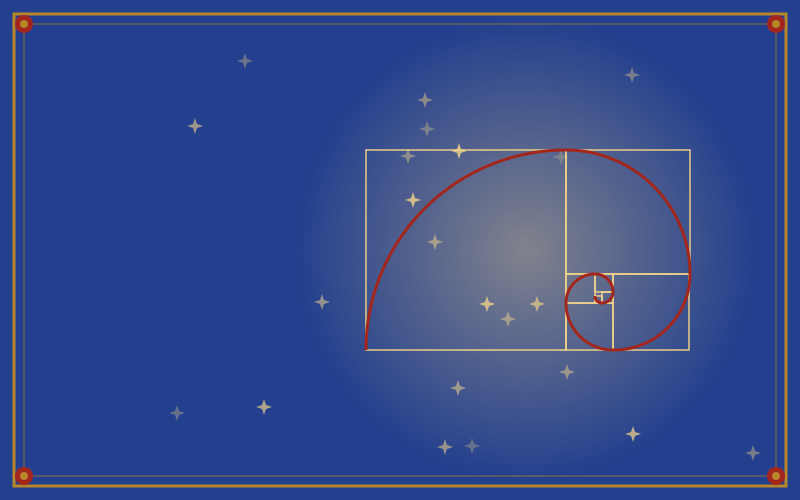
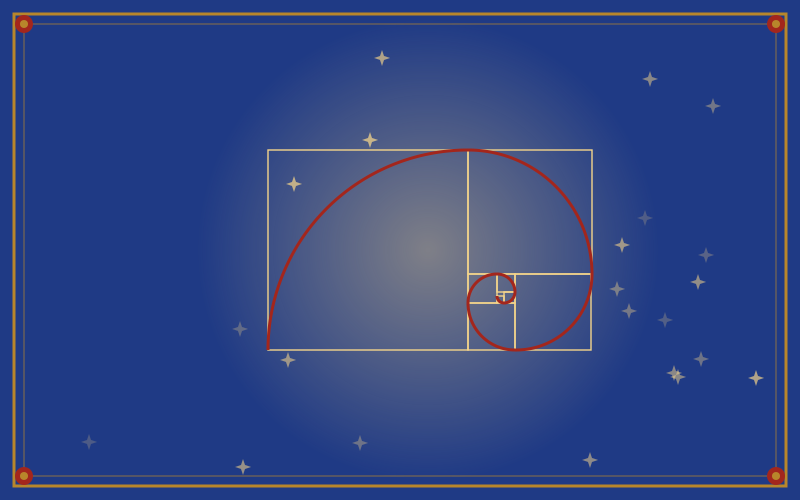
Fibonacci and the spiral: the numbers that grow in nature
The Fibonacci sequence, its link with the golden ratio, the spirals of sunflowers and pine cones and their symbolic meaning as ordered growth.
The pyramids of Giza: geometry, orientation and solar symbol
The Great Pyramid between fact and legend: alignment to the cardinal points, the seked system, the supposed pi and the symbolism of the sun's ray.
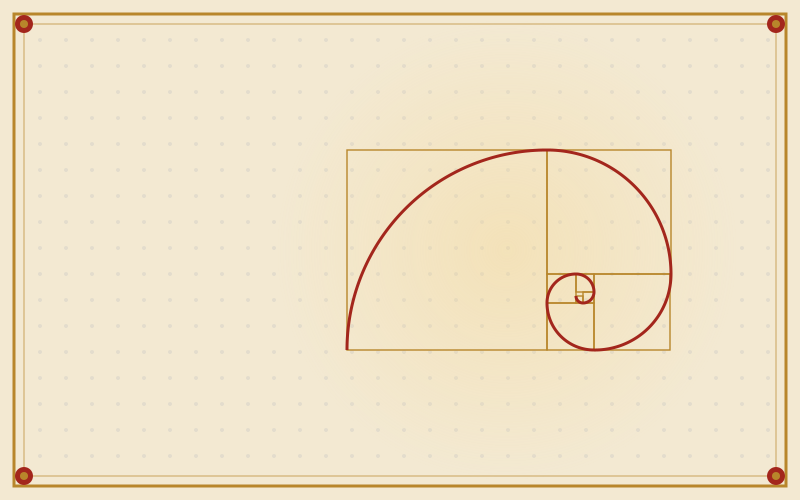
The golden ratio: the divine proportion in maths and symbol
What the golden ratio is, how to construct it with ruler and compass, where it truly appears and why tradition called it the divine proportion.
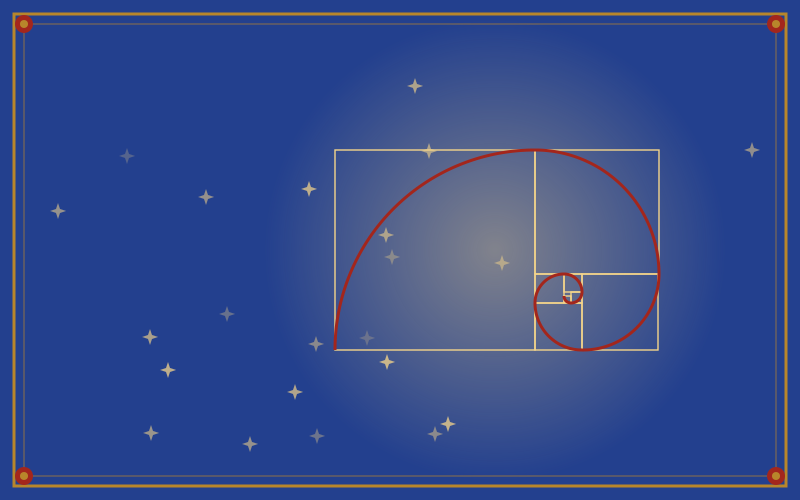
The Gothic rose window: geometry of a wheel of light
How a rose window is made and read: dividing the circle, radial symmetry, the theology of light, and examples at Chartres, Paris, Verona and Orvieto.
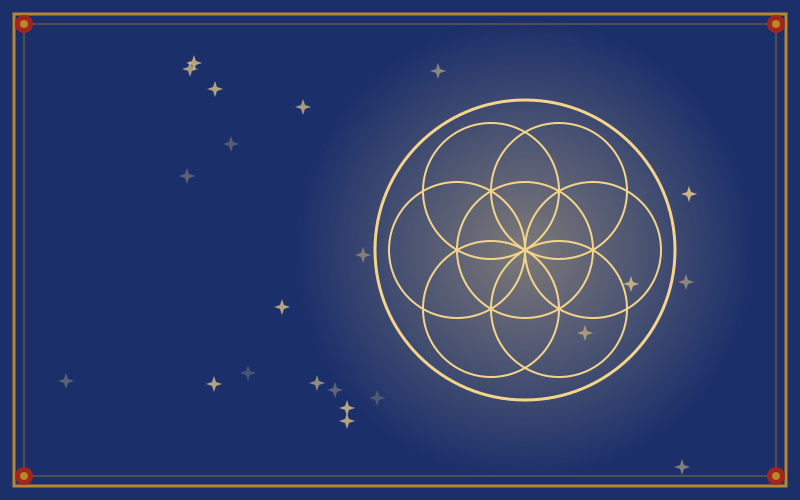
The heavenly Jerusalem: the foursquare city of Revelation
The geometry of the heavenly Jerusalem in Revelation: a foursquare city, twelve gates, twelve foundations, the number 144 and its images in medieval art.
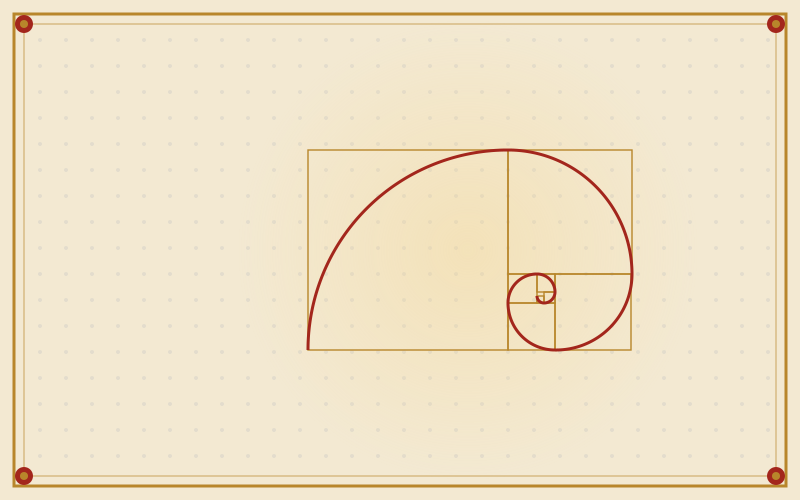
Islamic geometry: stars, tessellations and the infinite
How the geometric patterns of Islamic art are made: dividing the circle, eight- and ten-pointed stars, girih and muqarnas, from the Alhambra to Palermo.
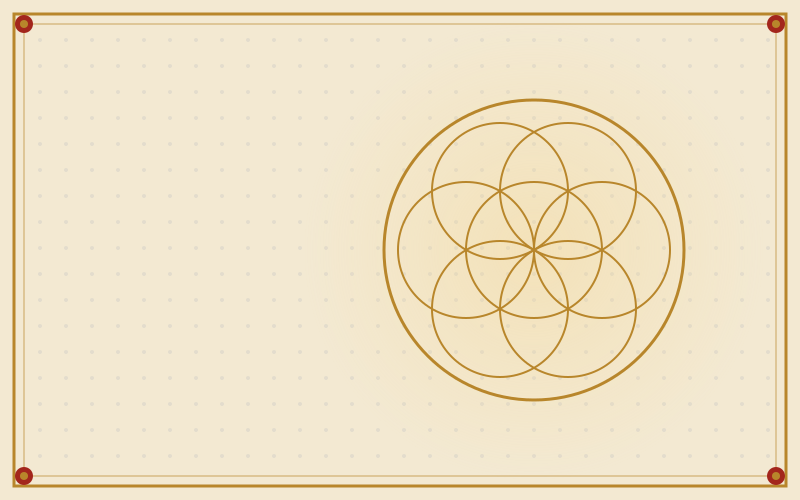
Kepler and the Platonic solids: the dream of a geometric cosmos
Kepler's Mysterium Cosmographicum: the five Platonic solids between the planetary orbits, the failure of the hypothesis and the search for world harmony.
Newgrange: winter solstice light in the heart of the tomb
The Neolithic mound of Newgrange in Ireland: the roof-box above the entrance, the winter solstice sunbeam, the carved spirals and their meaning.
Octagonal baptisteries: the number eight and the eighth day
Why so many baptisteries are octagonal: the verses attributed to Ambrose, the eighth day, Noah's ark and examples from Rome, Ravenna, Florence and Parma.
The Pantheon in Rome: a perfect sphere beneath the dome
The geometry of the Pantheon: the inscribed sphere, the oculus open to the sky, the coffers, the path of light and the change from pagan temple to church.
The Parthenon: proportions, hidden curves and optical refinements
The geometry of the Parthenon in Athens: the column ratio, the curvature of the stylobate, entasis, the inclined columns and the golden ratio myth.
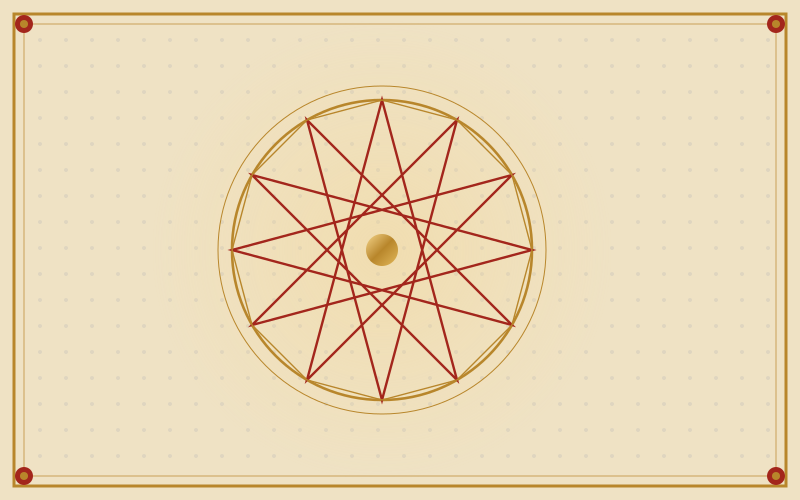
Plato's Timaeus: the cosmos built from two triangles
How Plato in the Timaeus builds fire, air, water and earth from two elementary triangles, and why this vision nourished European sacred geometry.
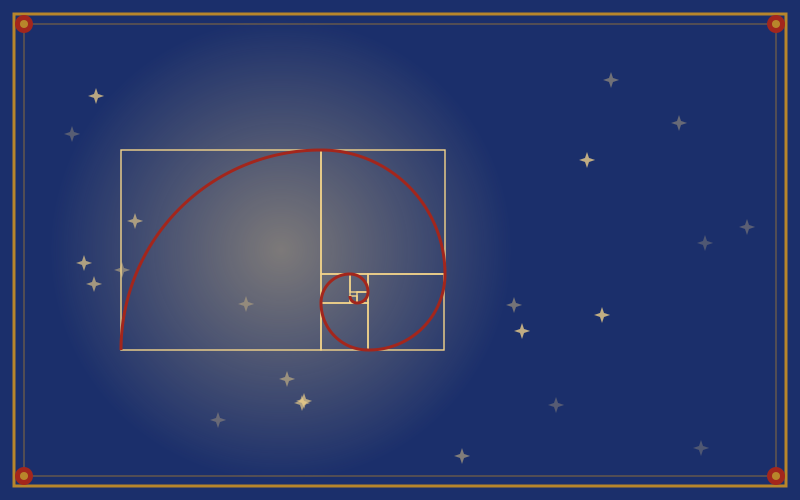
Squaring the circle: an impossible problem and its meaning
Why squaring the circle is impossible with ruler and compass, and how it became a symbol of the union of heaven and earth, from Dante to the alchemists.
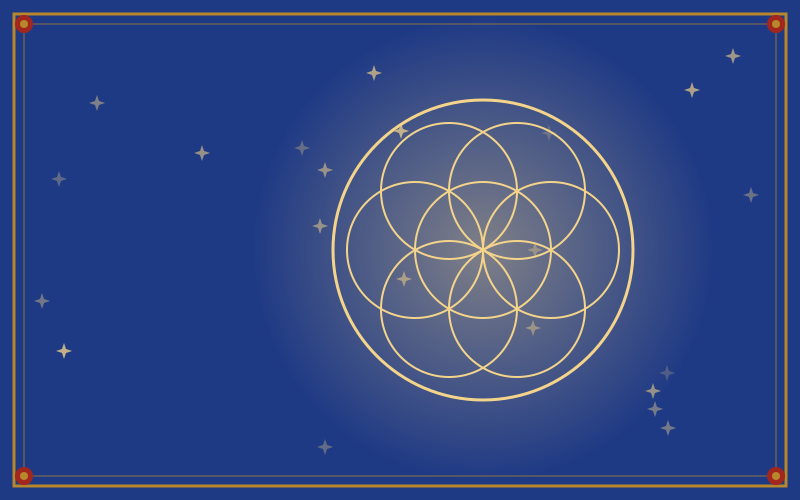
The Sri Yantra: nine interlocking triangles around a point
Structure and symbolism of the Sri Yantra: the nine triangles, the central bindu, the lotus petals, the square enclosure and the difficulty of drawing it.
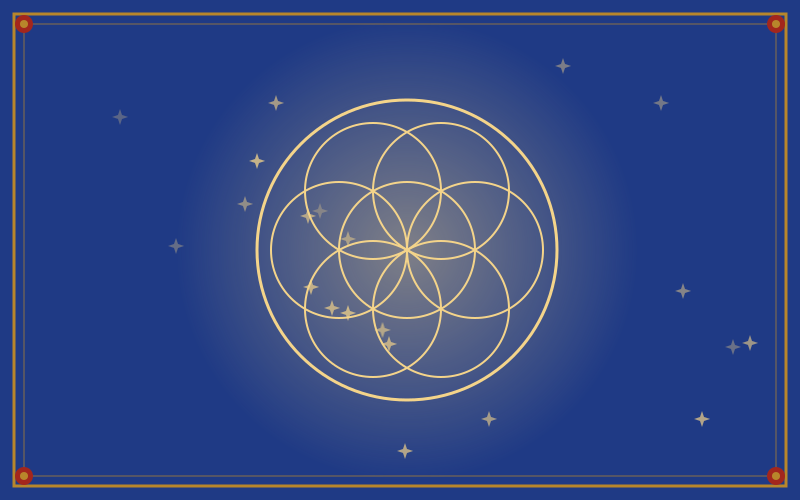
Stonehenge and the solstices: a stone circle aligned to the sun
What we really know about Stonehenge: building phases, stones, the solstice axis and later legends, separating established facts from hypotheses.
The stupa and Borobudur: Buddhist architecture as cosmos
Form and meaning of the Buddhist stupa, from the dome of Sanchi to the five elements of the chorten, up to the great stone mandala of Borobudur in Java.
The Temple of Solomon: biblical measures and the Holy of Holies
The measurements of Solomon's Temple in the First Book of Kings: its three parts, the cube of the Holy of Holies, Jachin and Boaz and the bronze sea.
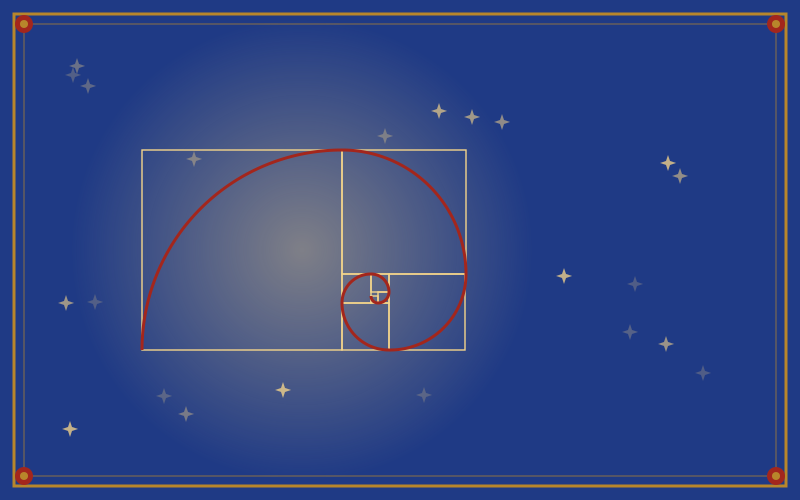
The Tibetan sand mandala: geometry of a celestial palace
How a sand mandala is built in the Tibetan tradition: its geometric structure, gates, rings, colours and the final ritual gesture of dissolution.
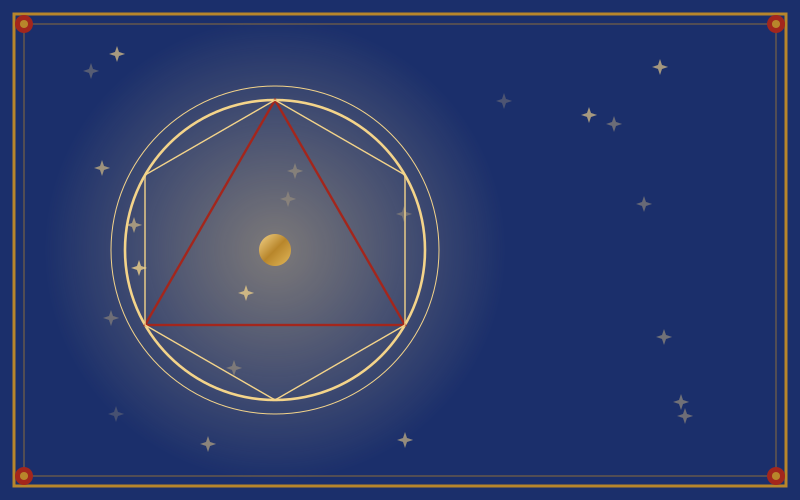
The triangle and the tetractys: the first figure to enclose space
The triangle in sacred geometry: the Pythagorean tetractys, the alchemical triangles of the elements, the trinity and the meaning of the simplest figure.
The portfolio of Villard de Honnecourt: a traveller's geometry
Villard de Honnecourt's thirteenth-century portfolio: cathedrals, rose windows, figures built with geometry and the practical lore of medieval lodges.
The Vitruvian Man: the human body between circle and square
From Vitruvius' text to Leonardo's drawing: how the Vitruvian Man unites circle, square and bodily proportion in a symbol of cosmic harmony.