If the Sefer Yetzirah is the seed of Kabbalah, the Zohar is its great canopy. The name means «splendour» and comes from a verse in the book of Daniel, in which the wise shine like the splendour of the firmament. For many centuries the Zohar was regarded in the Jewish world as the kabbalistic text par excellence, and today it is still the reference point for anyone studying the tradition of the sefirot.
A work that appears in Castile
The Zohar began to circulate in Castile at the end of the thirteenth century. The man who spread its manuscripts was the kabbalist Moses de León, who presented it as the copy of an ancient text going back to the second-century master Shimon bar Yochai and his circle.
The question of authorship has been debated for centuries. In the twentieth century the historian Gershom Scholem argued, on linguistic and historical grounds, that the main core of the work had been written by Moses de León himself. Later studies have nuanced this view, suggesting the contribution of a group of kabbalists. Within the religious tradition, on the other hand, the attribution to Shimon bar Yochai remains a firm point for many. Those who study the Zohar today can keep both perspectives in mind: the historical one and that of the tradition.
Language and form
The Zohar is written largely in Aramaic, a language that gives the text an archaic and solemn tone. In its main part it takes the form of a commentary on the Torah, organised according to the weekly reading portions.
But it is not a dry commentary. The text is full of narrative scenes: Rabbi Shimon and his companions, called the chevraya, walk the roads of Galilee, meet mysterious travellers, stop under a tree and begin to explain a verse. Often the humblest character, a donkey driver or a child, turns out to carry a profound teaching. It is a work that unites doctrine and story.
The main sections
Alongside the continuous commentary, the Zohar includes parts with a character of their own. The best known are:
| Section | Content |
|---|---|
| Sifra di-Tzeniuta | the «Book of Concealment», a short and enigmatic text |
| Idra Rabba | the «Great Assembly», where the masters describe the divine face |
| Idra Zuta | the «Lesser Assembly», which recounts Rabbi Shimon's last teachings |
| Midrash ha-Ne'elam | the «Hidden Midrash», partly also in Hebrew |
Other texts are often associated with the Zoharic tradition too, such as the Tikkunei Zohar, a series of commentaries on the beginning of Genesis.
The great themes
The Zohar does not set out its doctrine systematically, but certain themes return constantly.
The sefirot as divine life
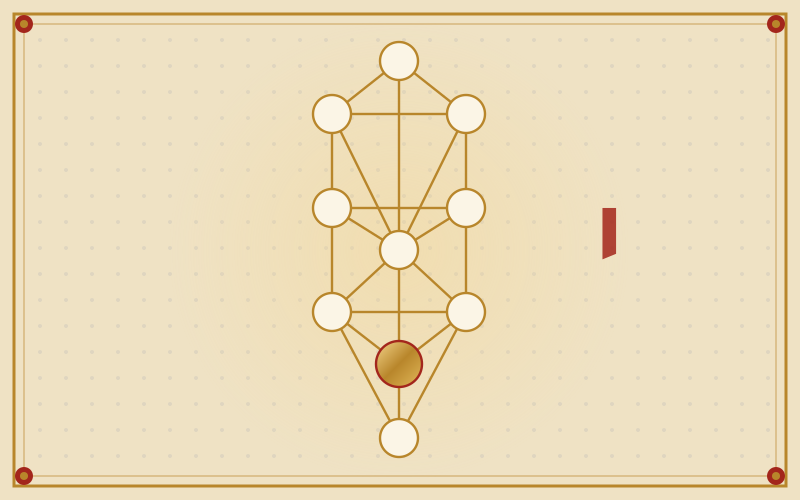
The ten sefirot are not abstract concepts: the Zohar describes them as living aspects of the divine, interacting like members of a family, like parts of a body, like colours of one light. The symbols multiply: the king and the queen, the father and the mother, the flowing river, the tree that bears fruit.
The Shekhinah
One of the most intense themes is the Shekhinah, the divine presence in the world, identified with the last sefirah, Malkuth. The Zohar describes her as a feminine figure, separated and in exile together with the people, waiting to be reunited with her heavenly bridegroom. This image had an enormous influence on later devotion.
The hidden meaning of the Torah
The Zohar insists that the stories of the Torah are only its outer garment. Whoever looks only at the garment, it says in a famous passage, does not see the body; whoever looks at the body does not yet see the soul. True study consists in passing from the garment to the soul of the text.
Its diffusion
For some centuries the Zohar circulated in manuscript among small circles. In the sixteenth century it was printed for the first time in Italy, in Mantua and Cremona, and from then on it spread widely. It became the basis of the Kabbalah of Safed, including that of Isaac Luria, and through Christian Kabbalah it also reached European scholars.
At Studio Esoterico Cornelio the Zohar is considered a text to be approached gradually: we suggest starting from a good historical introduction and selected passages, before tackling the hardest parts such as the Idrot.
In short
- The Zohar appears in Castile at the end of the thirteenth century, spread by Moses de León.
- Tradition attributes it to Shimon bar Yochai; historical research places it in the Middle Ages.
- It is written largely in Aramaic, as a narrative commentary on the Torah.
- It includes special sections such as the Sifra di-Tzeniuta, the Idra Rabba and the Idra Zuta.
- It was printed in the sixteenth century in Mantua and Cremona and became the central text of Kabbalah.