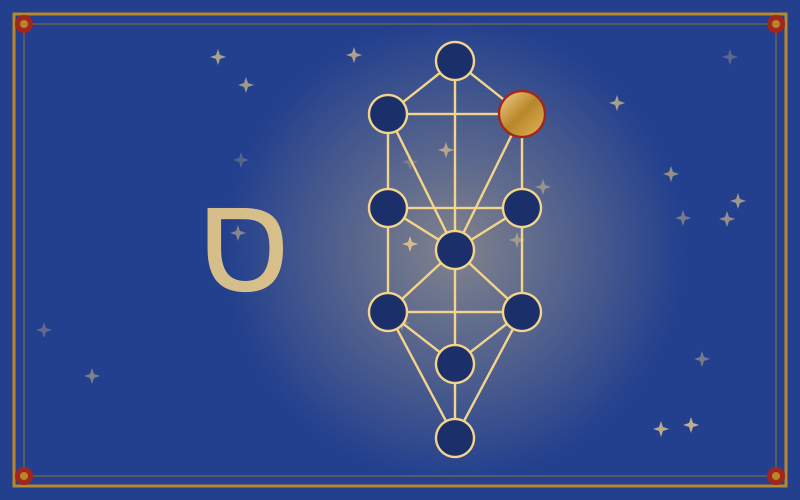
Kabbalah is not only a doctrine to be studied in books: in many cases it is interwoven with the calendar and with the practices of religious life. One of the clearest examples is the counting of the Omer, a period of forty-nine days that the kabbalistic tradition has transformed into an ordered journey through the sefirot.
What the Omer is
The book of Leviticus prescribes counting seven complete weeks from the day on which an omer, a measure of barley, was offered at the Temple during the festival of Pesach. On the fiftieth day Shavuot is celebrated, the feast of Weeks, which the tradition links to the giving of the Torah at Sinai.
After the destruction of the Temple the offering was no longer made, but the counting remained. Every evening, for forty-nine evenings, a short blessing is recited and the number of the day is declared: «today is the first day of the Omer», and so on, also specifying the weeks.
From freedom to revelation
The traditional meaning of the period is that of a journey: from Pesach, which recalls the exodus from Egypt and therefore freedom, to Shavuot, which recalls revelation. Freedom alone is not enough: it must be filled with content. The forty-nine days are the time needed to prepare to receive.
The kabbalistic reading
Kabbalists noticed that the number of days, seven times seven, corresponds perfectly to the seven lower sefirot, those concerning the emotional qualities and action in the world:
| Week | Sefirah | Quality |
|---|---|---|
| 1 | Chesed | love, generosity |
| 2 | Gevurah | severity, discipline |
| 3 | Tiferet | balance, beauty, truth |
| 4 | Netzach | perseverance, victory |
| 5 | Hod | humility, acknowledgement |
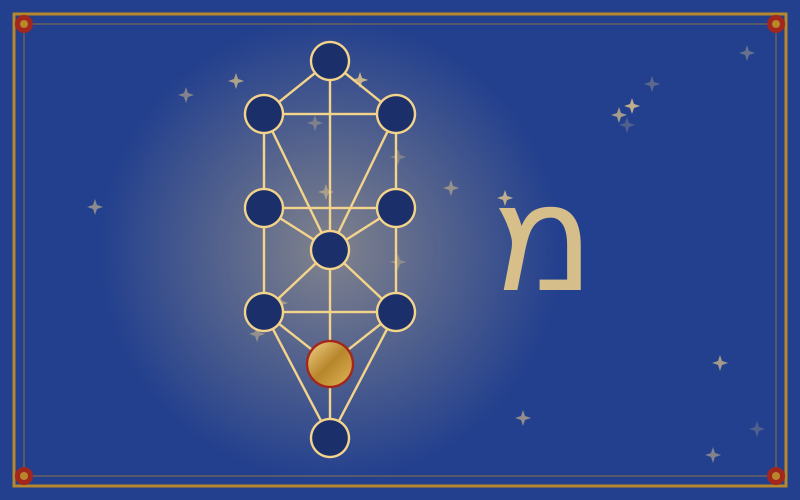
| 6 | Yesod | foundation, bond |
| 7 | Malkuth | sovereignty, presence |
But the correspondence goes further. Each sefirah, according to Kabbalah, contains all the others within itself. So each day of the week also receives a sefirah: the first day of every week is Chesed, the second Gevurah, and so on up to Malkuth.
The combination of days
The result is a grid of forty-nine combinations. The first day is Chesed in Chesed (chesed she-be-chesed), love in its purest form. The second is Gevurah in Chesed, severity within love. The forty-ninth is Malkuth in Malkuth, presence fully realised.
Each combination becomes a theme of reflection for the day. For example:
- Gevurah in Chesed asks: does my love know how to set limits, or does it scatter itself?
- Chesed in Gevurah asks: does my discipline also contain kindness?
- Tiferet in Netzach asks: is my perseverance balanced, or does it grow rigid?
In this way the counting is not just a number to be declared, but a daily exercise of inner examination.
Lag BaOmer
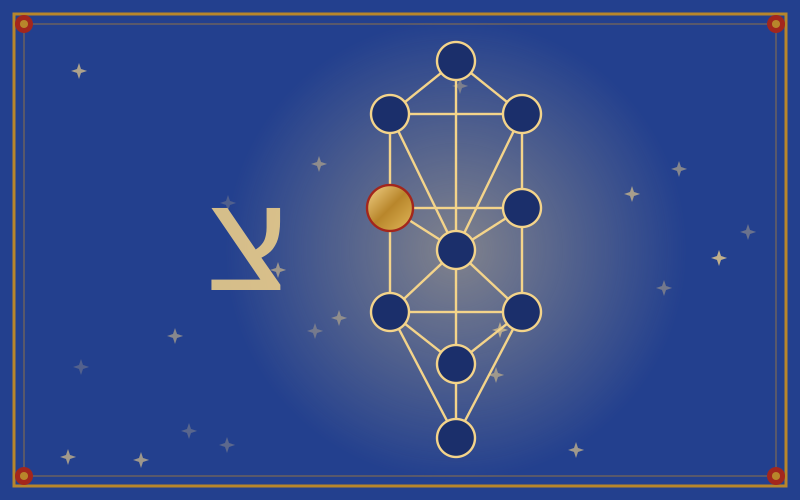
The thirty-third day of the Omer has a name of its own: Lag BaOmer. «Lag» is not a word, but the number 33 written with the letters Lamed (30) and Gimel (3), according to the Hebrew numbering system.
It is a feast day within a period that the tradition lives with a certain sobriety. In the kabbalistic tradition it is associated with Shimon bar Yochai, the master to whom the Zohar is attributed: according to a widespread custom, it is the day of his death, celebrated not as mourning but as a feast of the light of his teaching. Bonfires are lit, and in Meron, in Galilee, where the tomb attributed to the master is located, large crowds gather.
In the grid of the sefirot, the thirty-third day corresponds to Hod in Hod: the fifth day of the fifth week.
A path possible outside the rite too
The counting of the Omer belongs to Jewish practice, and should be respected in its context. But its structure offers those who study Kabbalah a valuable model: a forty-nine-day path in which each quality is examined in all its combinations.
Studio Esoterico Cornelio suggests using this grid as a study tool: devoting a short note in a notebook to each combination, observing how the seven qualities intertwine in everyday life. It is not a rite, but a way of making knowledge of the sefirot concrete and lived.
In short
- The counting of the Omer lasts forty-nine days, from Pesach to Shavuot.
- Kabbalah links the seven weeks to the seven lower sefirot, from Chesed to Malkuth.
- Each day combines two sefirot, from «Chesed in Chesed» to «Malkuth in Malkuth».
- Lag BaOmer, the thirty-third day, is associated with Shimon bar Yochai and corresponds to Hod in Hod.
- The Omer grid is a model for the inner examination of the qualities.