Few angelic names have undergone a transformation as radical as that of the Cherubim. In the Bible they are imposing creatures, armed guardians and bearers of the divine throne; in Renaissance and Baroque art they became chubby winged children. Tracing their history means separating two images that common language has confused, and rediscovering one of the richest symbols of the tradition.
The first appearance: at the gates of Eden
The Cherubim are the first heavenly beings named in the Bible with a proper category name. At the end of the third chapter of Genesis, after the expulsion of Adam and Eve, God places the Cherubim to the east of the garden, along with the flame of a flashing sword, to guard the way to the tree of life.
Their first task, then, is guarding a threshold. They are not messengers but guardians: they mark the boundary between sacred space and the ordinary world, between lost unity and the human condition. This function as keepers of the threshold will accompany the Cherubim in all their later appearances.
On the Ark of the Covenant
The book of Exodus gives precise instructions for building the Ark. On its cover, called the mercy seat, two Cherubim of hammered gold are to be placed, one at each end, with their wings spread upward and their faces turned toward each other and toward the cover. The space between them is the place from which God will speak to Moses.
Figures of Cherubim were also embroidered on the curtains of the Tabernacle and on the veil that separated the Holy Place from the Holy of Holies. In Solomon's Temple, according to the first book of Kings, two great Cherubim of olive wood overlaid with gold spread their wings in the Holy of Holies. Scripture repeatedly calls God «he who is enthroned upon the Cherubim».
An empty throne
The image is significant: God's throne is defined by the wings of the Cherubim, but the place of the throne remains empty. The divine is not depicted; only its guardians are. The Cherubim point to a presence without portraying it.
Ezekiel's vision
The most complex description is found in the book of Ezekiel. In the first chapter the prophet sees four «living creatures»; in the tenth he explicitly identifies them as Cherubim.
| Element | Description in the text |
|---|---|
| Faces | each has four faces: human, lion, ox, eagle |
| Wings | four wings, two joined and two covering the body |
| Movement | they go straight ahead without turning |
| Wheels | beside them, wheels full of eyes that move with them |
| Appearance | like burning coals and torches |
In chapter 10 Ezekiel gives as the first face that of a cherub instead of the ox, a variant that has prompted much discussion among commentators.
The four faces and the four Evangelists
The book of Revelation takes up the image of the four living creatures around the throne, each with one face: lion, calf, man, eagle. Beginning with Irenaeus of Lyon and then in stable form with Jerome, Christian tradition associated them with the four Evangelists: the man with Matthew, the lion with Mark, the ox with Luke, the eagle with John. This is the origin of the Tetramorph carved on the portals of Romanesque and Gothic cathedrals.
Roots in the Near East
Many scholars compare the biblical Cherubim to the composite creatures of Mesopotamian art, such as the winged guardians with the body of a bull or lion and a human head placed at the gates of Assyrian palaces. The function is similar: protecting a sacred or royal threshold. The name itself has been linked to the Akkadian term karibu, «one who prays» or «one who intercedes», but the etymology remains uncertain.
From power to tenderness: the putti
How did we get from these awe-inspiring creatures to the winged children of Baroque ceilings? The shift is artistic rather than theological. The Renaissance recovered from ancient art the figure of the eros or cupid, the winged boy who accompanies Venus. Artists used it to populate the skies of their paintings, and in common usage those figures took the name of cherubs. They are often shown only as small heads with wings, an image vaguely recalling the idea of pure spirit, but having nothing to do with Ezekiel's Cherubim.
The Cherub in the hierarchy
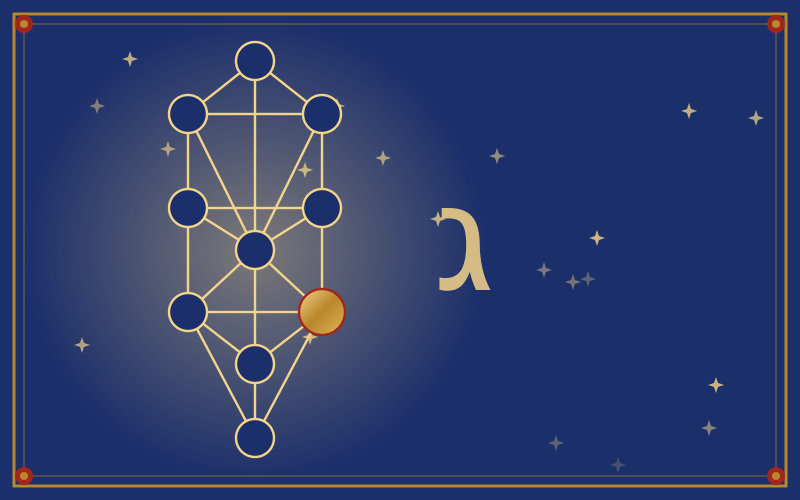
For Pseudo-Dionysius the Cherubim form the second choir of the first triad, after the Seraphim. If the Seraphim are linked to ardour, the Cherubim are linked to fullness of knowledge: their name was interpreted as «outpouring of wisdom». Medieval theologians took up this distinction, assigning love to the Seraphim and intellectual contemplation to the Cherubim.
In short
- In Genesis the Cherubim guard the way to the tree of life: they are first of all guardians of a threshold.
- On the Ark of the Covenant two golden Cherubim mark out the place of the divine presence without depicting it.
- Ezekiel describes them with four faces and four wings, an image taken up in the Tetramorph of the four Evangelists.
- The winged putti of Renaissance art derive from classical cupids, not from biblical tradition.
- In the hierarchy of Dionysius the Cherubim are the second choir, linked to fullness of knowledge.